Save up to 30% today on selected artwork!
Shadows in the Night
Encounters with the Chupacabra
Real Blind Artist
1/11/20263 min read
The chupacabra, the legendary "goat-sucker" whose name derives from the Spanish words chupar (to suck) and cabra (goat), emerged as one of the most chilling cryptids of modern folklore. This blood-sucking monster first gripped public imagination in 1995, when reports from Puerto Rico described a series of bizarre livestock attacks. Farmers discovered goats, sheep, and other animals lying dead with small puncture wounds in their necks, their bodies eerily drained of blood while the carcasses remained otherwise intact. Panic spread quickly across the island, transforming quiet rural nights into scenes of dread.
The mythical creature chupacabra is often depicted as a terrifying reptilian beast, roughly the size of a small bear, with leathery, scaly skin that shimmers like wet stone under moonlight. A distinctive row of sharp spines runs along its back from neck to tail, quivering as the creature moves with unnatural agility. Its eyes glow an intense red, piercing the darkness like embers, hypnotic and malevolent. In Puerto Rican accounts, it sometimes appears bipedal, hopping like a demonic kangaroo, armed with silent-slashing claws and fangs built for piercing veins. Some descriptions add wings or a lingering sulfuric stench that hangs in the air long after its departure. In contrast, sightings in the southwestern United States often portray a more dog-like form—hairless, mangy, and alien in appearance. Yet always marked by that same insatiable thirst for blood.
The chupacabra legend traces its roots deeper into Latin American folklore, with echoes of earlier phenomena like the 1970s "Vampiro de Moca" in Puerto Rico, where similar unexplained attacks claimed cows, pigs, and geese. The name perfectly captured the horror of those first victims: goats with surgical-like throat marks, as if preyed upon by a precise, vampiric predator. From Puerto Rico, stories of the beast seemed to migrate southward and northward to Mexico, Chile, Argentina, and even rare reports in Russia. Thes accounts fueled a wave of sightings that spread like wildfire. In the U.S., particularly Texas and other border regions, the creature evolved in popular imagination, sometimes dismissed as mangy coyotes but retaining its supernatural aura.
The impact of the chupacabra on communities and livestock has been profound and devastating. In the 1990s outbreaks in Puerto Rico, hundreds of animals perished, crippling rural economies dependent on herding. Farmers lost goats, sheep, rabbits, cats, dogs, and even horses overnight, their bloodless corpses serving as grim reminders of vulnerability. Beyond financial ruin, the fear reshaped daily life: brighter lights illuminated yards, rifles stayed close at hand, children remained indoors after dusk, and elders revived ancient tales of blood-suckers to ward off the unknown. The psychological toll proved exhausting feeding sleepless nights filled with paranoia, a shattered sense of security in the natural world, where peaceful farms turned into battlegrounds against an invisible enemy.
One chilling account from a Texas shepherd described a decimated flock amid a thick, rotten-egg odor, leaving him convinced the beast now stalked him personally.
Even as science often attributes these sightings to diseased canids like coyotes suffering from severe mange, thus explaining the hairless, scaly look and aggressive behavior the legend endures. Reports continue into recent years, with a notable 2024 game camera capture in Dubina, Texas, reviving interest in 2025 through media coverage, including a Discovery Channel feature on the "Texas Chupacabra." Sporadic claims persist across the southwestern U.S., from Colorado backyards to Riverside County mountains, and into Latin America, where unexplained livestock deaths still spark speculation. Hundreds of people annually report hearing eerie hisses, glimpsing glowing eyes, or discovering punctured kills, keeping the myth vibrant in our digital era.
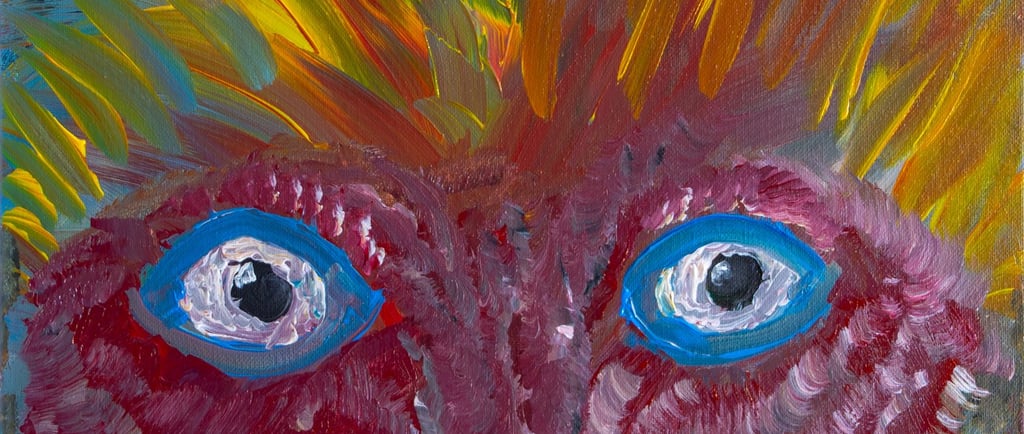
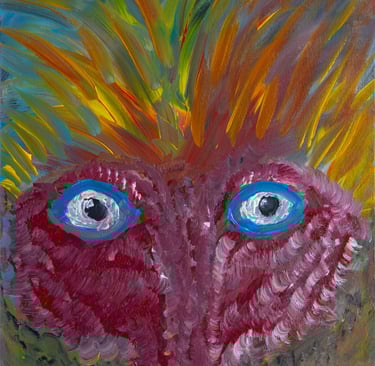
Amid the lingering terror, art offers a powerful way to confront and process the unknown. "The Real Blind Artist," known on X as @TopBlindArtist, has vividly captured the chupacabra's essence despite his blindness. His paintings portray the mystical creature with glowing eyes that seem to stare directly into the viewer's soul, and stalking features crouched low, spines raised, poised to strike. It evoked its predatory grace. Bold strokes define the scaly skin, while eerie reds bring the hypnotic orbs to life, blending chupacabra mythology with imaginative depth. These viral works reflect shared experiences of fear and wonder, transforming the unseen into something tangible and inspiring.
In the end, the chupacabra lives as a shared shadow in the collective imagination. A potent mix of myth, misidentification, and mystery hunts at night in mystic reality. Whether born from ancient folklore, an evolved predator, or something stranger, it reminds us of the unknowns that still lurk beyond the edges of our world. The legend thrives because it taps into primal fears, binding cultures across borders in a timeless tale of the night. Realblindartist.com